
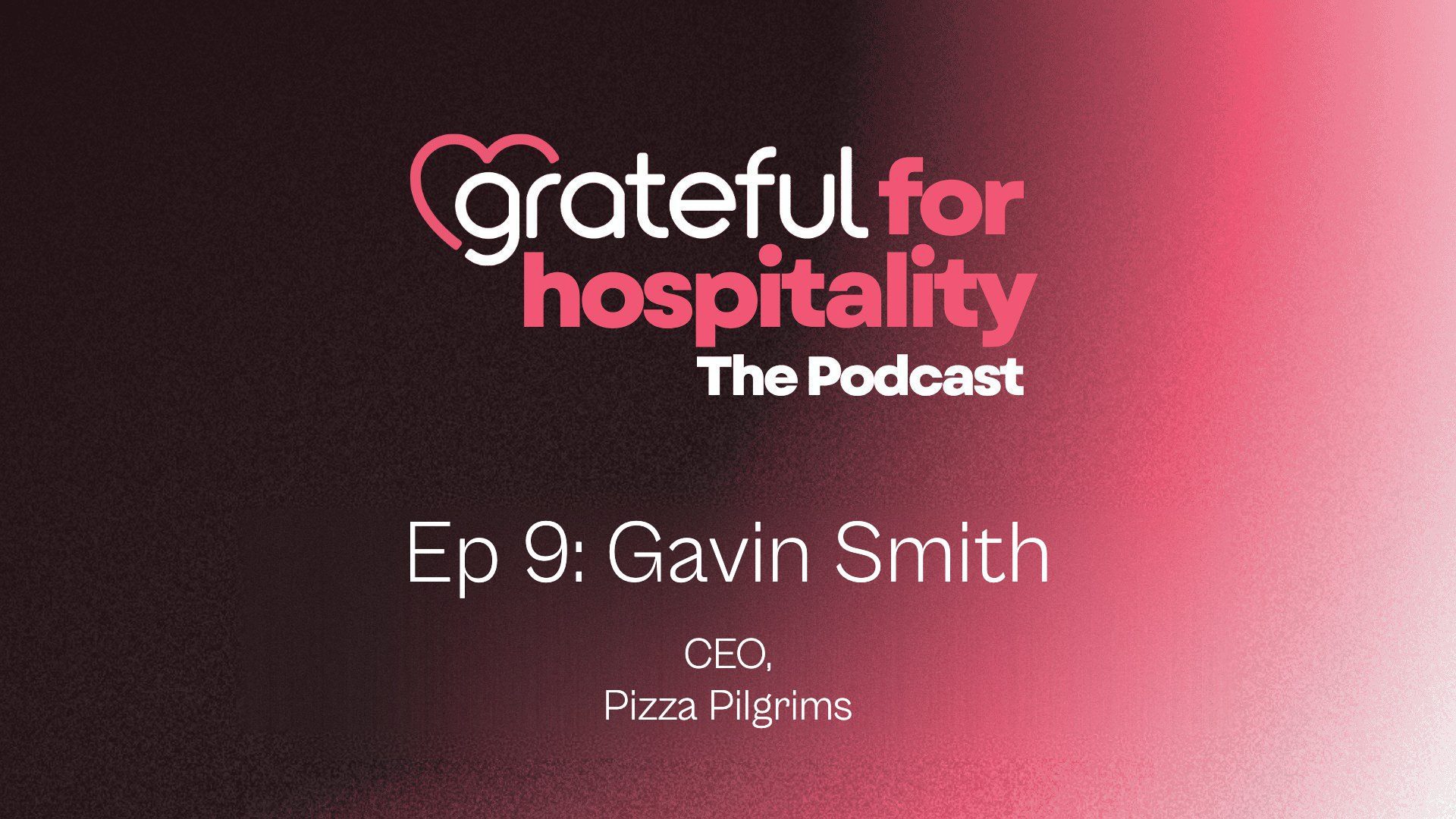
The Grateful for Hospitality Podcast features candid conversations with founders, operators, and experts shaping the sector. Practical insights, honest stories and ideas to make you think.
Listen to Episode 9.
Pizza Pilgrims sells just 14 pizzas, each one takes 55 seconds to cook, and one oven at Kingly Court can turn out 1,100 of them in a day. Gavin Smith, CEO of the brand that began as a three-wheeled van on Berwick Street, sits down with Mason at the original Dean Street pizzeria to explain how it grew to 31 pizzerias, 700 people and a first site in Munich, which is trading at double expectations. Listen for the delivery maths that made them pull back, why “we’re a family” is the wrong way to run a team, the basil you literally can’t buy, a Neapolitan head chef’s rule about anchovies and why Gavin’s kids will be getting a hospitality job at 16.
Episode summary
How do you scale a restaurant brand without losing what made it special? Gavin Smith started out washing dishes in a pub at 16 and was a head chef at 21. Nine years ago he joined Pizza Pilgrims when it had five or six sites, and he now leads it as CEO: 31 pizzerias, 700 people and a new site in Munich. He tells Mason how simplicity got them there: 14 pizzas, dough proved over two days, delivery capped at 25% of revenue and labour held at 32% of sales for six years. Plus the risotto cook-off against the head chefs, Munich selling three times more Moretti than Paulaner, what Germany’s VAT cut did for its high streets and why “bigger deserves better”.
About the guest
Gavin Smith is CEO of Pizza Pilgrims, the Neapolitan pizza brand founded by Thom and James Elliot after a pizza pilgrimage across Italy in a three-wheeled Ape van. A chef by trade, he went from washing dishes in a South Lakes pub to head chef at 21. He then held roles at Café Uno, Mitchells & Butlers’ Premium Country Dining Group (which grew from two sites to 82 in his time there), Browns and Wahaca, where he was operations director. He joined Pizza Pilgrims nine years ago as operations director, became MD and has been CEO for the last 18 months. Today the business runs 31 pizzerias with 700 people across the UK and Germany, and is a certified B Corp.
Key topics covered
- Why 14 pizzas and 55 seconds is the whole business model
- Mansfield or Madrid: why Pizza Pilgrims took the brand to Munich rather than smaller UK towns
- What Germany’s VAT cut from 19% to 7% did for its high streets, and what a UK cut to 10% could do
- The delivery maths: 40% gone before you’ve paid your team, and why delivery is capped at 25% of revenue
- Five pizzas, 30% faster: how a smaller delivery menu earned the company’s highest rating
- From a beer mat and a three-wheeled van to 31 pizzerias and 700 people
- Why “we’re a family” is the wrong way to run a team
- Why people really stay or leave, and how Pizza Pilgrims listens to its teams every week
- Holding labour at 32% of sales for six years while paying people more
- The basil Pizza Pilgrims grows itself because you can’t buy it
What we discussed
- [1] Gavin’s route into hospitality, rising through multi-site operators and what Pizza Pilgrims is doing for pizza in the UK
- [2] Washing dishes in a South Lakes pub at 16, ditching a history degree at York and an army dad’s verdict: “We’d better be a good one”
- [3] Head chef at 21, the first culinary arts HND in Birmingham and learning front of house at Café Uno
- [4] Two sites to 82: seven years opening country pubs with Mitchells & Butlers’ Premium Country Dining Group and running the Trout in Oxford
- [5] Browns, then five years at Wahaca opening every site outside London and learning what working with great founders feels like
- [6] Joining Pizza Pilgrims at five or six sites: operations director, MD, then CEO, and running the business alongside Thom, James and CFO Sophie
- [7] Opening in Munich: why the first site sets the DNA, half as many restaurants as the UK and three times more Moretti than Paulaner
- [8] Head chef Rodney, the risotto cook-off against the head chefs, the frozen fish nobody has forgotten and the five-year club of 50-odd people who challenge every decision
- [9] Founders who know what they don’t know, why accountants shouldn’t run restaurants, and what Manchester United teaches about consistency
- [10] Mansfield or Madrid: 14 pizzas, 55 seconds, dough proved over two days, and Munich sales at double expectations in the first 10 days
- [11] Germany’s VAT cut from 19% to 7%: full high streets, operators reinvesting in their people and a parent company that lobbied for it
- [12] The biggest refurbishment spend yet in 2027, a doubled marketing team, and why Marks & Spencer’s two for £10 deal is competition too
- [13] “I just want my kids to want to go to Pizza Pilgrims”: building a brand that’s still relevant in 10 years
- [14] A smaller community pizzeria format for 2027, the 25% delivery cap and Wimbledon’s standout opening
- [15] Rebuilding the pass, the first electric ovens in Bristol and Wimbledon, and 1,100 pizzas a day from one oven at Kingly Court
- [16] From a Lake District kitchen to CEO of a European business, the dream of buying his local pub, and opening five sites this year with GMs averaging eight years’ tenure
- [17] Delivery: from a 5% nice-to-have to an engine that can take over, nine channels, a plan for 2030 and a new app and loyalty programme in January
- [18] Aggregators, dynamic pricing, a five-pizza menu that cut delivery times by 30%, and the day delivery became the cheapest way to buy their pizza
- [19] The carbonara pizza, the double pep, a chilled tankard of their own design, a margarita that became a bestseller overnight and the monthly food meeting called the Chopper
- [20] “Why you don’t mix the mountain and the sea?”: a Neapolitan head chef, anchovies on ‘nduja and a pizza binned over one small hole
- [21] The founders’ story: a beer mat, a three-wheeled Ape on a credit card and six weeks home at 16mph
- [22] £5 pizzas on Berwick Street, dough made in The Duck & Rice cellar, Russell Norman’s tip-off on Dean Street and the second site at Kingly Court
- [23] Growth is good: no dividends in nine years, every penny reinvested, and why it’s Pizza Base, not head office
- [24] The Evening Standard’s 2014 street food list revisited: half of it gone, and Pizza Pilgrims the only one to score five again
- [25] “Bigger deserves better”: private equity, the new owners and a senior team that calls each other out
- [26] “Families are dangerous”: high-performing sports teams, the stretch development programme and managing partners in place of area chefs
- [27] How to eat a Neapolitan pizza, leopard spotting on the base, and why nothing on the menu is processed
- [28] Caputo flour, fior di latte from Sorrentina, San Marzano tomatoes with nothing added and two kinds of pepperoni
- [29] The basil you can’t buy: a speed-dating meet, a South London vertical farm, 14 varieties tested and a new leaf-to-stem ratio
- [30] B Corp: fourth restaurant business in the UK to be certified, and why reassessment is getting tougher
- [31] What makes people stay: inductions, 85% happiness, the All Gravy app and weekly pulse surveys linked to sales and reviews
- [32] VAT at 10%, 20 weeks’ maternity pay and why the relationship with your boss decides everything
- [33] Kids in hospitality at 16, a million young people out of work, labour at 32% of sales and adapt or die
- [34] What Gavin is most grateful for
Key quotes
“One of the most beautiful things Thom’s ever said, one of our founders is, where do you want to be in 10 years? He’s like, I just want my kids to want to go to Pizza Pilgrims.”
– Gavin Smith
“If you were a sole trader, they’re starting at 35%. They’re probably spending 5% in-app ad spend. So you’re at 40% of the sale before you’ve paid the labour, the packaging.”
– Gavin Smith
“If you have a poor performing …
– Gavin Smith
Key takeaways
Keep the menu small enough to master. Fourteen pizzas at 55 seconds each means one oven can do 1,100 a day, so the limit is your people, not your kit. When Pizza Pilgrims cut one busy site’s delivery menu to five pizzas, delivery times dropped 30% and the site’s rating became the best in the company.
Do the delivery maths before the aggregators do it for you. Commission of around 35% plus 5% on in-app ads means 40% of the sale is gone before labour or packaging. Set a ceiling, as Pizza Pilgrims has by capping delivery at 25% of revenue, and invest in your own channels so you own the customer relationship.
Build a team, not a family. High-performing sports teams don’t carry poor performance, and a superstar who joins a weak team won’t stay. Carrying people means you’re not respecting the ones who are delivering.
Remember that people leave managers. The relationship with the boss is still the number one reason people stay or go. Pizza Pilgrims checks team happiness every week, links it to sales and review scores, and fixes problems before they become resignations.
Get more efficient so you can pay more. Pizza Pilgrims has spent 32% of sales on labour for six years while becoming 25% more efficient than two years ago. That’s how rising wages get paid without a rising wage bill.
Keywords
Grateful Hospitality Podcast, Grateful net, episode 9, Pizza Pilgrims, Gavin Smith, Pizza Pilgrims CEO, hospitality podcast, restaurant podcast, UK hospitality, Neapolitan pizza, pizza restaurant, restaurant business, scaling a restaurant, multi-site restaurants, casual dining, restaurant growth, international expansion, Munich, Germany, restaurant delivery, Deliveroo, Uber Eats, delivery commission, VAT cut hospitality, hospitality VAT, restaurant leadership, team culture, staff retention, hospitality careers, hospitality recruitment, labour costs, living wage, B Corp restaurant, street food, Thom and James Elliot, Dean Street, Soho, Mason Potter